
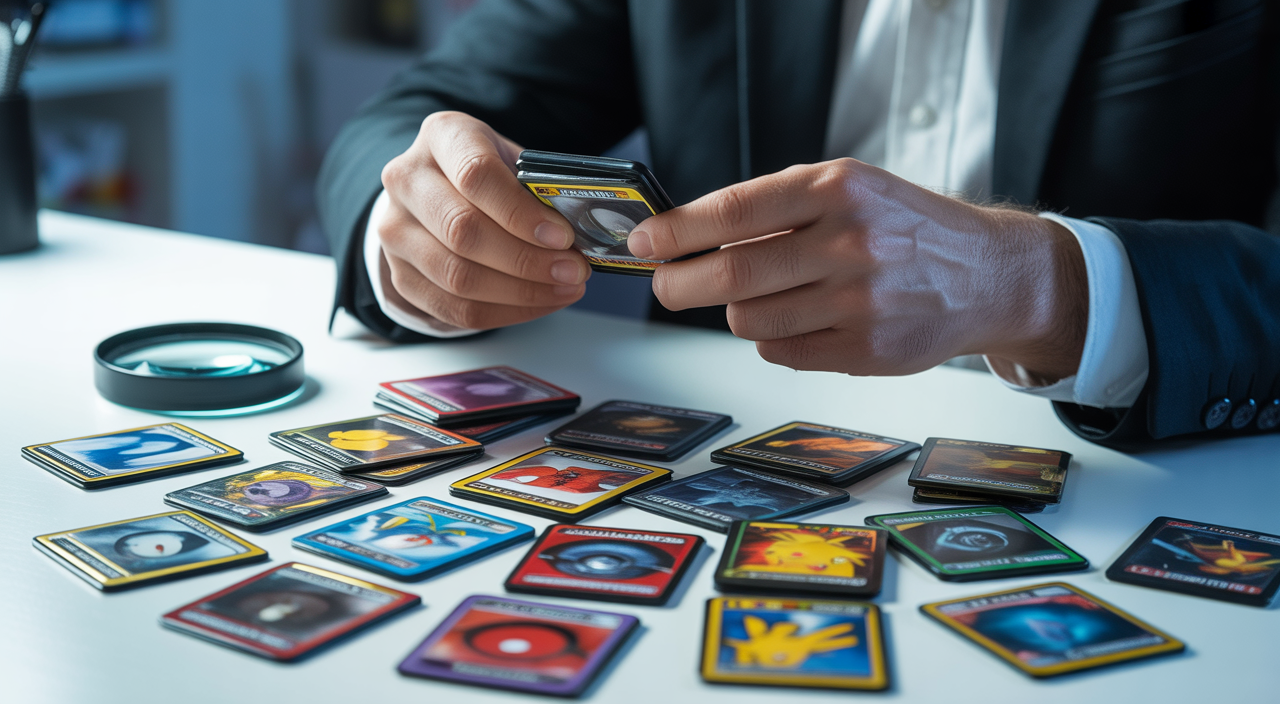
Are your Pokémon cards truly genuine? In the exciting world of collecting, few things are as thrilling as finding a rare card. But the hobby also comes with a challenge: fake cards. Counterfeit cards can trick even experienced collectors. They often look very similar to the real thing at first glance.It’s a common worry for collectors everywhere. No one wants to spend money on fake items. That’s why knowing how to identify real pokemon cards is super important. This guide will help you learn the key signs to look for. It will give you the confidence to build a genuine collection.

The First Line of Defense: General Authenticity Checks
Before diving into tiny details, let’s start with some basic tests. These quick checks can often tell you a lot about a card’s authenticity right away.
The Feel Test: Card Stock and Texture
Pick up the card and hold it. Real cards have a specific feel. They are usually thicker and more rigid than fakes. Genuine cards often have a slight texture that feels smooth, but not overly glossy or slippery. Fakes might feel too thin, flimsy, or even like cheap cardboard. Some fakes can also feel too stiff, like a laminated piece of paper. You might even hear a unique “snap” when you flick a real card gently.
The Light Test: Transparency and Light Absorption
Hold the card up to a bright light. A real card has a black layer in its middle. This layer makes it difficult to see through. Fake cards often lack this layer. If you can see light clearly through the card, or if the colors appear washed out when held to light, it’s a big red flag. Authentic cards will block most of the light.
Visual Clues: What to Look For
Now, let’s look closer. Many differences between real and fake cards show up in their visual details. Grab a magnifying glass if you have one!
Printing Quality and Color Saturation
Look at the artwork and text. Real cards have sharp, clear printing. Colors are vibrant and consistent. Fake cards often show signs of poor printing. This can include blurry images, pixelation, or faded colors. The borders of fake cards might also look fuzzy or uneven.
Borders and Edges
Examine the yellow border around the card’s artwork. On genuine cards, this border is usually uniform in width. The edges of the card should be cleanly cut. Fake cards might have uneven borders. Their edges can be rough, jagged, or poorly cut. Look for any signs of fraying or white edges where the layers of the card might be separating.
Font and Text Clarity
Pay close attention to all the text on the card. This includes the Pokémon’s name, HP, attack names, and description. Real cards use a specific font. The text is sharp and easy to read. Fake cards often use incorrect fonts. The text might be blurry, too thin, too thick, or have strange spacing. Check the small numbers for HP and attack damage too.
Energy Symbols and Set Symbols
Every card has energy symbols for attacks and a small symbol that tells you which set it belongs to. These symbols should be perfectly clear and correctly shaped. Fakes often have energy symbols that are slightly off. They might look squashed, stretched, or pixelated. The set symbol, usually near the bottom right of the artwork, is also a common area for errors on fake cards.
Copyright Information and Illustrator Name
Look at the very bottom of the card. You will find copyright information and often the illustrator’s name. Real cards will have accurate copyright details, like “©2023 Pokémon/Nintendo/Creatures Inc./GAME FREAK inc.” Fakes might have missing copyright info, incorrect dates, or typos. The illustrator’s name should also be clear and properly spelled.
The Sparkle and Shine: Holographic and Textured Patterns
Many popular cards feature special finishes. These are often the hardest for counterfeiters to get right.
The Unique Sheen of Real Holos
Holographic cards, also called “holos” or “foil” cards, have a special shimmer. Real holos have distinct patterns when light hits them. Classic holos often have a “cosmos” pattern or vertical lines. Modern reverse holos might show a star pattern. Fake holos often look like cheap glitter or a simple shiny sticker. The way they reflect light just won’t look the same. The effect on a real card is embedded, not just applied on top.
Textured Cards (V, VMAX, Alt Arts)
Newer, high-rarity cards often have a tactile, embossed texture. You can actually feel this texture with your finger. It usually follows the lines of the Pokémon’s artwork. This texture is a strong sign of genuine cards. Fake textured cards either lack this texture entirely or have a very poor, flat, or inconsistent imitation of it. This is a crucial check for modern ultra-rare cards.
Common Types of Fake Pokémon Cards and How to Spot Them
Fakes come in different levels of quality. Knowing the common types helps you identify them faster.
- Low-Quality “Cardboard” Fakes: These are the easiest to spot. They feel like thin, rough cardboard. The printing is often faded, blurry, and the colors are dull.
- Glossy/Plastic Fakes: These cards often have an unnatural, overly shiny, plastic-like finish. They might feel thin and slippery. The colors can be too saturated or look like they’re printed on a sticker.
- High-Quality Proxy/Replica Fakes: These are the most dangerous. They try hard to look real. They often require you to perform multiple checks mentioned above. Look for tiny discrepancies in font, texture, and holographic patterns.
- Misprints vs. Fakes: Sometimes, real cards have small printing errors. These are called misprints and can even be valuable. But a misprint is different from a fake. A misprint still has all the other genuine characteristics (card stock, correct font, proper holo pattern). A fake card will usually fail multiple authentication tests.
Where to Buy Real Pokémon Cards: Your Trusted Sources
Knowing how to spot fakes is one thing, but avoiding them altogether is even better. It’s vital to buy from reliable sources.
Always consider official retailers or established game stores. These places are known for selling authentic products. Online, look for sellers with excellent reviews and clear return policies. Be wary of deals that seem too good to be true, especially for rare cards. These are often a sign of fakes.
When you’re ready to expand your collection with confidence, choosing a reputable seller is paramount. At PandaShops.store, we meticulously verify the authenticity of all our single cards. Browse our extensive selection of real pokemon cards and find your next treasured addition.
Once you confirm your cards are genuine, you’ll want to protect your valuable collection. Just like choosing the best ways to keep other important items safe, consider an expert guide on choosing safe brands for your treasured possessions. When buying online, it’s always wise to be careful. Understanding how to scan website security vulnerabilities can also help ensure you’re shopping on a secure site.
What to Do if You Encounter a Fake Card
If you find a fake card in your collection or realize you’ve bought one, don’t worry. Here’s what you can do:
- Report it: If you bought it from an online marketplace, report the seller to the platform. This helps protect other buyers.
- Dispute the Charge: If you paid with a credit card or a secure payment service, you might be able to dispute the charge.
- Safely Dispose: Do not sell or trade fake cards as real ones. This harms the community. It’s best to dispose of them safely.
Conclusion: Collect with Confidence
Collecting Pokémon cards is a fantastic hobby. By learning these simple yet effective authentication methods, you empower yourself. You can protect your investments and enjoy your collection without worry. Always stay informed, trust your instincts, and buy from trusted sources. With these tools, you’re empowered to build a truly authentic and valuable collection.
Frequently Asked Questions
Why are there so many fake Pokémon cards?
Fake Pokémon cards exist because of the high demand and value of genuine cards. Counterfeiters try to profit by creating cheaper, unofficial versions. They aim to deceive collectors, especially those new to the hobby or looking for rare cards at unusually low prices.
Can fake Pokémon cards be worth anything?
No, fake Pokémon cards generally have no monetary value in the collecting market. They are not recognized by The Pokémon Company or by reputable collectors. While they might be used for casual play among friends, they are worthless for official trading, collecting, or investment purposes. Their existence actually devalues the genuine market.