

Understanding the basics
Bringing electronic goods into India is a great business opportunity. But before your shipment reaches the warehouse, you must clear an important legal step. That step is getting an epr certificate in import.
This certificate falls under Extended Producer Responsibility (EPR) rules. In simple terms, the government wants producers and importers to take care of their products even after people stop using them. This mainly applies to e-waste such as laptops, phones, TVs, and other gadgets.
For Indian investors and importers, understanding this rule is not just about avoiding problems. It is also a way to build a strong, future-ready brand that respects the environment and attracts serious partners.
Why the EPR certificate in import matters so much
Electronics imports into India are rising fast. So is e-waste. Regulators now expect every responsible importer to show a clear plan for recycling and safe disposal of their products. That is exactly what the epr certificate in import confirms.
An EPR authorization links your import volume with a defined e‑waste collection target, usually expressed as a percentage of the quantity you place in the market each year. You must either set up your own collection system or work with Producer Responsibility Organizations (PROs) and government-authorized recyclers to meet these targets and report the results annually on the portal.
Here is what you gain by being compliant:
- Regulatory compliance: Your shipments clear customs smoothly because all legal requirements are in place.
- Environmental leadership: You show that your business cares about safe recycling and reduced pollution.
- Better brand image: Distributors, retailers, and customers trust companies that follow green rules.
- Stable market access: You avoid sudden shipment holds or policy shocks and keep your supply chain steady.
Documents you need before applying
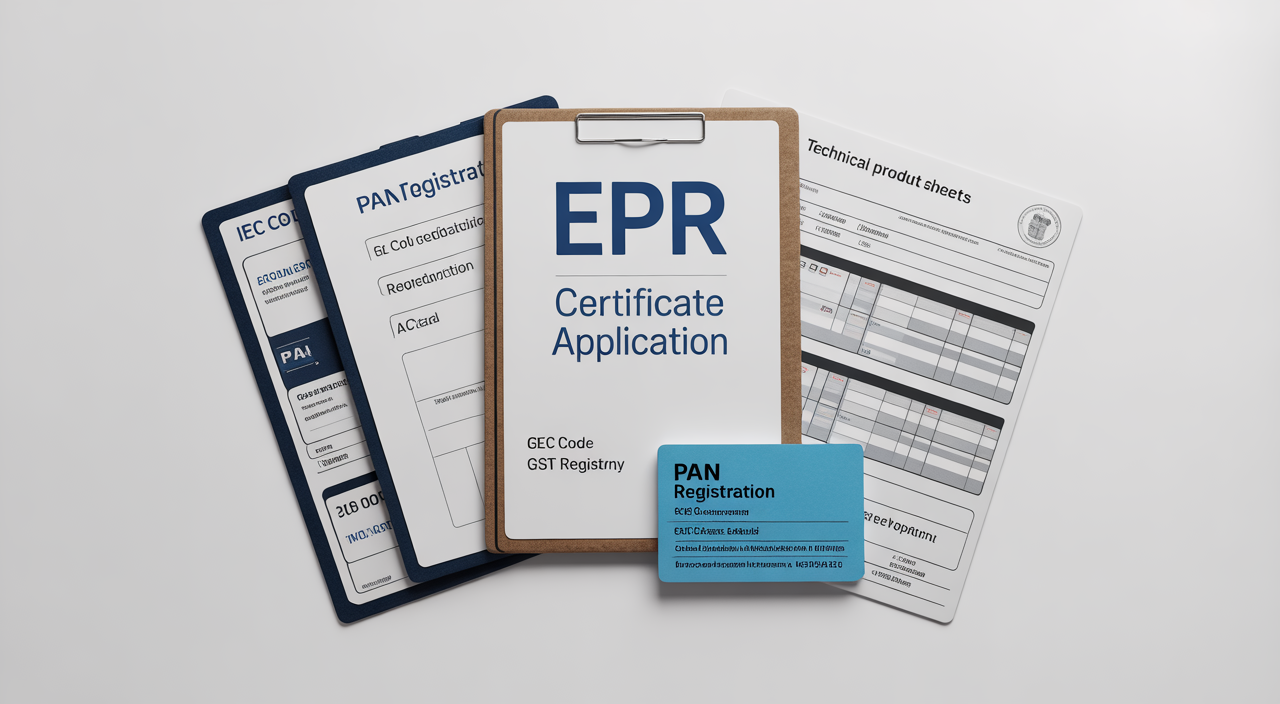
To save time, collect all key documents before starting the online application. Most businesses will need:
- Copy of importer’s PAN card
- GST registration certificate
- IEC (Import Export Code)
- List of product categories with basic technical details
- Declaration if you import any old or used equipment
- Proof of e-waste recycling tie-up, such as an MOU or contract with a recycler
- Authorization from the manufacturer if you are a distributor or brand licensee
- Board resolution or power of attorney authorizing the signatory
Keep soft copies ready in clear, readable format. Blurred scans often lead to queries and delay approvals.
In addition, you may be asked to provide details of your projected import quantities for the coming year, existing stock in the Indian market, and the geographical areas where your products will be sold. Having realistic estimates ready makes it easier for authorities to set appropriate EPR targets and speeds up scrutiny.
Validity and renewal: plan around the financial year
Once granted, your epr certificate in import usually stays valid for one full financial year, from April to March. You can keep importing during this period as long as you follow the conditions mentioned in the certificate.
To avoid gaps, start the renewal process at least 30 days before expiry. Treat this like renewing a key license for your business. A missed renewal can slow down imports at the worst possible time, such as festive seasons or major product launches.
Remember that EPR is not a one-time compliance. You must also upload periodic returns on the portal, showing how much e-waste was collected and channelized through authorized recyclers against the targets mentioned in your authorization. Delays or gaps in filing these returns can create problems at the time of renewal.
Step-by-step process to get your certificate
The process is online and quite structured. Here is a simple roadmap:
- Collect documents: Use the checklist above to gather all mandatory papers in digital form.
- Register on the CPCB portal: Create your company account on the Central Pollution Control Board’s e-waste portal.
- Fill the application: Enter importer details, contact information, IEC, PAN, and product categories.
- Upload documents: Attach all scanned copies carefully and double-check names and numbers.
- Pay the fee online: Pay the prescribed government processing fee on the portal.
- Wait for review: The authority examines your details. This may take around 7 to 15 working days in most cases.
- Download your certificate: Once approved, you can download the digital certificate from the portal.
- Submit at customs: Share this certificate whenever customs officers ask for EPR proof during clearance.
During scrutiny, CPCB or the concerned State Pollution Control Board may raise online queries asking for clarification on your product categories, recycler agreements, or collection strategy. Responding promptly within the given time frame and keeping all communication documented on the portal helps your application move forward smoothly.
Common mistakes that slow down approval
Even careful importers make a few simple errors that cost time. Use this checklist as a quick self-audit:
- Unclear or incomplete document scans
- Wrong spelling or mismatch in company name, IEC, or PAN between documents
- Incorrect or missing product category codes on the portal
- Delaying renewal until the very last week of validity
- Allowing your e-waste recycler contract to expire without an updated agreement
Rectifying these points early keeps your application smooth and boosts your confidence while dealing with regulators.
Another frequent issue is underestimating future import volumes just to keep targets low. If your actual imports exceed what you declared, your collection targets and compliance reporting can fall out of sync, triggering extra scrutiny or corrective actions from authorities.
What could go wrong if you ignore EPR requirements?
Some importers hope they can manage without this certificate, at least for smaller consignments. That approach is risky. Non-compliance can block your growth and affect investor trust.
Potential outcomes include:
- Shipment detention at the port until you provide proper documents
- Additional costs if goods are held for long or returned to the origin country
- Fines and monetary penalties for repeated non-compliance
- Serious damage to reputation with logistics partners, lenders, and buyers
For Indian investors looking at long-term electronics trade, it is far wiser to treat EPR as a basic cost of doing responsible business.
In extreme cases, persistent violations can even lead to suspension of your authorization, restrictions on future imports, and legal proceedings under environmental laws. These consequences not only disrupt operations but also make it harder to attract serious international suppliers who look for compliant partners.
Costs involved in getting an EPR import certificate
The money you spend on EPR compliance is small compared with shipment values and potential penalties. Typical cost heads include:
- Government processing fee: Around ₹500 to ₹1,500
- Portal or professional handling charges: Around ₹300 to ₹800
- Consultancy or service provider fee: Often between ₹2,000 and ₹5,000, depending on volume and complexity
- Miscellaneous costs: Notarization, printing, courier, and related expenses, usually ₹500 to ₹1,200
For serious importers, these costs are an investment in smooth customs clearance and a cleaner, greener brand image.
Budgeting a small, fixed compliance amount into every consignment or financial year also makes your pricing more predictable. Many importers treat EPR costs just like insurance or logistics charges—essential overheads that protect the business from much larger disruptions.
Tips for Indian investors entering electronics imports
If you are just starting with electronics imports, combine EPR planning with your broader technology learning. Reading about topics like advantages of technology in the modern world can help you spot eco-friendly product opportunities too.
Also stay updated on policy trends, digital compliance tools, and modern marketing approaches. For example, understanding the role of technology in modern marketing helps you position your compliant, green brand better in the Indian market.
As global brands increasingly ask their partners to meet sustainability criteria, having a strong EPR track record can become a competitive advantage. It signals that you are ready to work with serious manufacturers, government projects, and large retailers that prioritize responsible sourcing.
How expert support simplifies your EPR journey
Handling everything on your own is possible, but it can be time-consuming, especially if you are new to regulatory work. A specialist service provider can:
- Review your documents and reduce the chances of rejection
- Handle portal registration, form filling, and follow-ups
- Monitor deadlines and remind you well before renewal dates
- Guide you on choosing the right product categories and recycler tie-ups
With expert help, you can focus on sourcing quality products, negotiating better prices, and building distribution networks, while compliance runs in the background.
Consultants who regularly deal with CPCB and State Boards also understand how to structure your collection plans, what supporting evidence is usually expected, and how to respond when authorities seek clarifications. This experience can save weeks of trial and error, especially for first-time importers.
Conclusion
For any business importing electronics into India, the epr certificate in import is now a basic requirement, not an optional extra. It keeps your shipments moving, protects your brand, and supports a cleaner environment. With the right documents, a clear process, and, if needed, guidance from professionals, you can treat EPR compliance as a smooth, repeatable part of your import strategy.
When you build your business on strong compliance and sustainability, you gain the trust of customers, partners, and investors for the long term.
FAQs on EPR certificate in import
Q1: What exactly is an EPR certificate in import?
A: It is an approval issued under India’s e-waste rules that confirms an importer or producer has taken responsibility for collection, recycling, and safe disposal of the electronic products they place on the market.
Q2: How long does the approval process usually take?
A: In many cases, authorities issue the certificate within about 7 to 15 working days after you submit a complete and correct application with all required documents and fee payments.
Q3: Can I renew the certificate online every year?
A: Yes. Renewal is done through the same online portal. Start the process at least a month before the current certificate expires so your imports continue without any interruption.
Q4: Is EPR compliance needed for all kinds of electronic items?
A: Most electrical and electronic equipment categories that create e-waste require EPR compliance. It is always wise to check the latest category list and confirm whether your products fall under it.